Edge Infrastructure Decision Brief

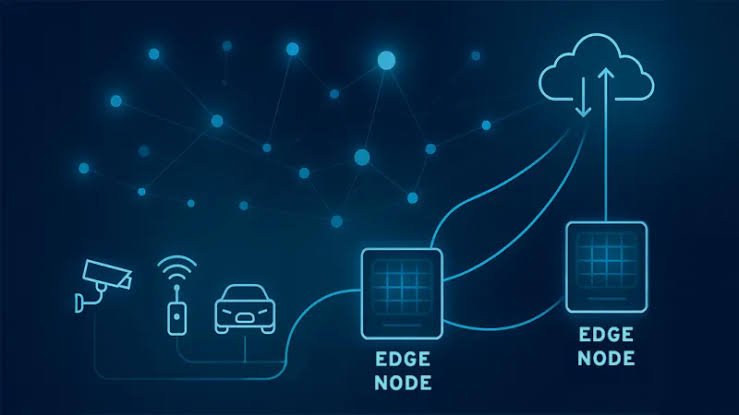
Enterprise IT leaders are evaluating latency thresholds, data sovereignty, and egress economics to determine true edge compute necessity.
Defaulting to centralized cloud architectures creates critical performance bottlenecks for operational workflows requiring immediate data processing.
Organizations must isolate legitimate edge use cases—such as real-time automation and localized compliance—from workloads better suited for hyperscale clouds.
Deploying edge computing only where sub-10ms latency or data sovereignty is mandatory cuts infrastructure TCO by up to 35% while maximizing operational uptime.
Leading enterprises are adopting pragmatic decision matrices, evaluating edge orchestration, hardware footprints, and centralized governance frameworks.
⚠ Within the next 3–5 years, enterprises deploying edge infrastructure without a clear workload threshold will face compounding maintenance overhead, security fragmentation, and budget sprawl.
Designed for CIOs, CTOs, enterprise architects, and digital transformation heads qualifying decentralized infrastructure investments.
- Edge vs. Cloud workload qualification framework
- Latency, bandwidth, and sovereignty threshold models
- Decentralized node security and remote management
- Edge infrastructure ROI and cost-benefit analysis
This strategic brief delivers an executive decision framework to determine precisely when, where, and how to deploy enterprise edge compute.
Enterprise Edge Readiness Blueprint
Determine your organization’s true edge requirements and optimize decentralized infrastructure investments.
✔ Workload qualification matrix
✔ Latency and egress cost calculator
✔ Edge architecture deployment model
✔ Strategic vendor evaluation guide
Download Full Report✔ Workload qualification matrix
✔ Latency and egress cost calculator
✔ Edge architecture deployment model
✔ Strategic vendor evaluation guide