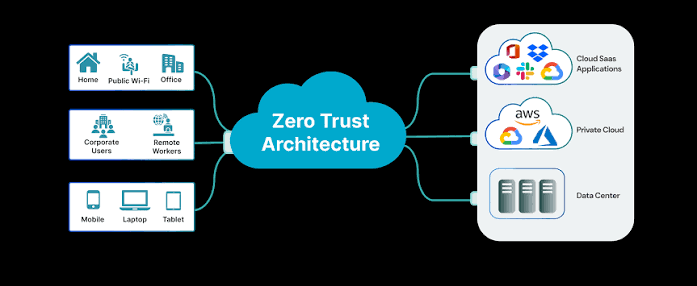
Traditional implicit-trust network perimeters fail to contain modern identity-based exploits, sophisticated lateral attacks, and complex cloud-native threat vectors.
Zero Trust enforces strict continuous verification, least-privilege access controls, and explicit micro-segmentation across all user requests and device endpoints.
Leading CISOs and security architects are aligning enterprise security architectures with NIST SP 800-207 frameworks to neutralize breach impacts across hybrid cloud operations.
Designed for CISOs, CTOs, IT security directors, and enterprise risk leaders managing enterprise security strategies.
- NIST-aligned Zero Trust framework
- Identity-first access controls
- Micro-segmentation architecture
- Continuous threat verification
This executive intelligence report provides strategic guidance for implementing a resilient Zero Trust architecture across enterprise environments.
✔ Risk exposure analysis
✔ Zero Trust migration roadmap
✔ Industry-specific architecture insights
✔ Strategic CISO recommendations