Next-Gen Networking Strategy Report

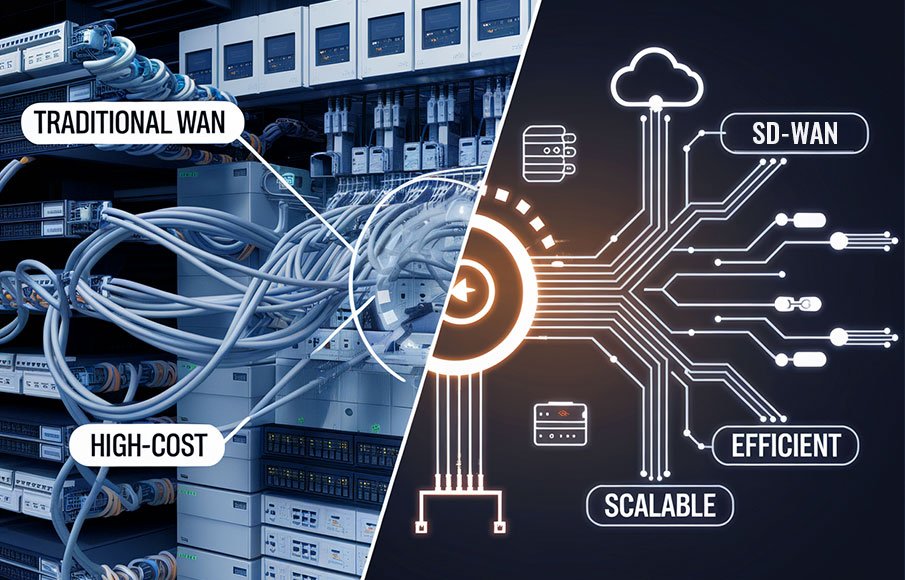
Legacy MPLS architectures are failing under cloud expansion, forcing enterprises toward SD-WAN and SASE integration.
Traditional WAN models built on static MPLS circuits were engineered for centralized data centers, not decentralized cloud ecosystems.
As multi-cloud adoption accelerates, enterprise infrastructure teams must migrate toward modern edge-to-cloud networking frameworks.
The future of enterprise connectivity requires converged networking and zero-trust security—shifting from perimeter security to cloud-native SASE architectures.
Forward-thinking CISOs and CTOs are replacing legacy backhauling with software-defined WAN and direct-to-cloud security posture.
⚠ Within the next 3–5 years, organizations reliant on legacy WAN backhauling face escalating bandwidth costs, severe latency bottlenecks, and expanded cyber attack surfaces.
Engineered for CIOs, CISOs, network architects, and IT security heads spearheading infrastructure modernization.
- SD-WAN vs. SASE Migration Frameworks
- Cloud-Native Security Convergence
- OPEX vs. CAPEX Network Optimization
- Zero Trust Edge Implementation
This strategic brief outlines actionable steps for transitioning enterprise networks away from obsolete WAN infrastructure.
Next-Gen WAN Transformation Intelligence Brief
Master the transition from legacy WAN to software-defined, zero-trust network architectures.
✔ WAN modernization roadmap
✔ SASE & SD-WAN evaluation criteria
✔ Security-driven network optimization
✔ Enterprise migration timelines
Download Intelligence Brief✔ WAN modernization roadmap
✔ SASE & SD-WAN evaluation criteria
✔ Security-driven network optimization
✔ Enterprise migration timelines