Multi-Cloud Architecture Brief

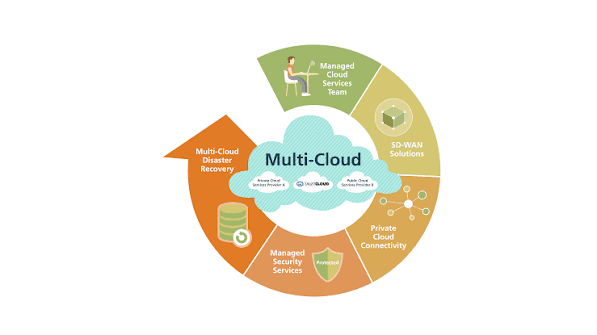
Fragmented cross-cloud routing throttles agility; forward-thinking teams deploy software-defined multi-cloud interconnects for seamless data transit.
Navigating multi-cloud architectures without a unified networking strategy leads to unpredictable egress costs, complex VPN meshes, and severe performance bottlenecks.
Organizations are transitioning from provider-native routing tools to vendor-neutral transit hubs and automated software-defined cloud interconnects.
Standardizing cross-cloud network backbones is the foundational requirement for enforcing consistent Zero Trust policies across hybrid environments.
Enterprise IT leaders leverage programmable cloud routing to automate path selection, optimize bandwidth utilization, and secure data in transit.
⚠ Within the next 3–5 years, enterprises without a cohesive multi-cloud networking architecture will suffer uncontained egress costs, operational blind spots, and frequent multi-cloud downtime.
Designed for CTOs, Cloud Architects, Infrastructure Directors, and Network Engineers scaling enterprise multi-cloud environments.
- Vendor-neutral cloud transit architecture
- Cross-cloud security & policy alignment
- Automated traffic routing & failover
- Cloud egress cost reduction strategies
This architecture report provides a high-impact framework for engineering a high-availability, cost-effective multi-cloud network infrastructure.
Multi-Cloud Network Connectivity Blueprint
Eliminate multi-cloud connectivity friction, optimize cloud egress costs, and enforce unified security across all cloud providers.
✔ Multi-cloud transit architecture model
✔ Cloud egress cost reduction roadmap
✔ Automated path selection & failover guide
✔ Executive migration framework
Access Intelligence Brief✔ Multi-cloud transit architecture model
✔ Cloud egress cost reduction roadmap
✔ Automated path selection & failover guide
✔ Executive migration framework