High-density enterprise campuses are facing unprecedented strain as IoT proliferation, real-time collaboration, and edge computing demand ultra-low latency. Legacy wireless networks are rapidly becoming critical choke points.
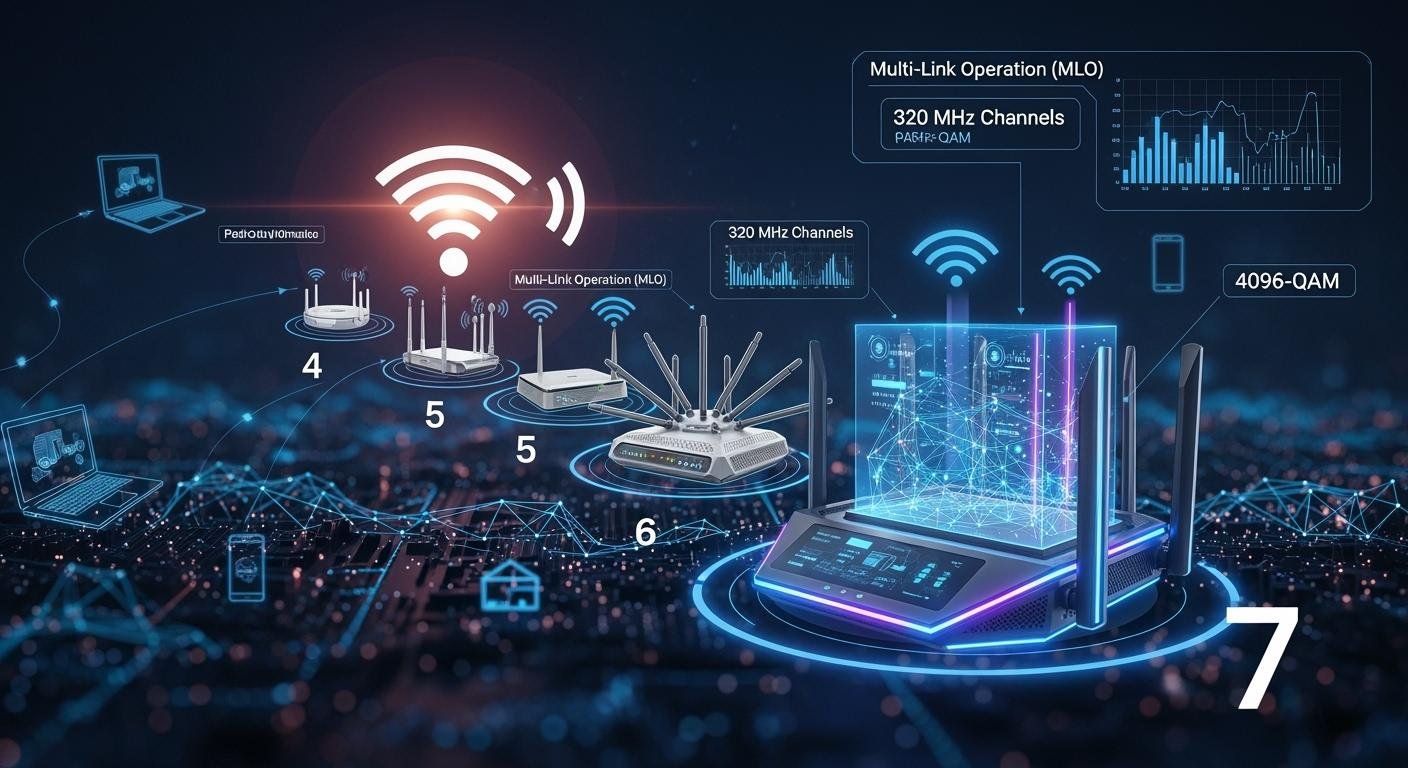
Wi-Fi 7 represents a paradigm shift, moving beyond simple speed upgrades to deliver deterministic performance. By leveraging 320 MHz channels and Multi-Link Operation (MLO), enterprises can guarantee seamless connectivity in hyper-congested spaces.
Forward-thinking infrastructure leaders are leveraging this standard to unify disparate systems, ensuring zero-packet-loss roaming for autonomous tools, unified communications, and cloud applications.
Designed specifically for CTOs, IT infrastructure leaders, and network architects navigating enterprise modernization, this transition directly secures the robust backbone required for hybrid workspaces.
- Multi-Link Operation (MLO) deployment
- High-density traffic management
- Latency-sensitive application routing
- Network architecture modernization
This intelligence brief provides actionable strategies for implementing high-capacity wireless architecture resilient enough to handle future enterprise demands.
✔ Infrastructure gap analysis
✔ Deployment phasing roadmap
✔ Security integration protocols
✔ CapEx vs OpEx strategic insights