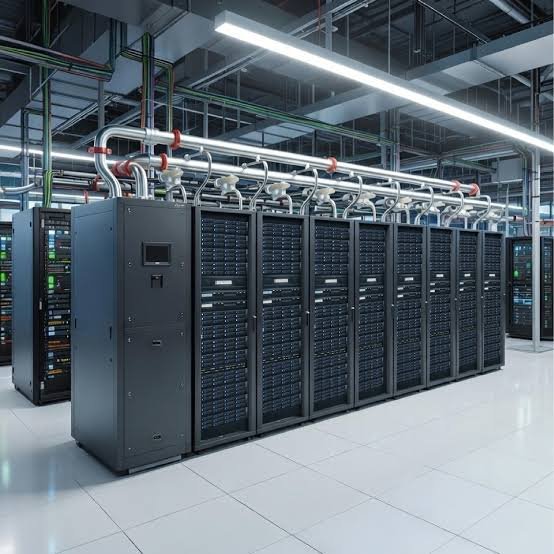
Next-generation high-TDP processors and high-density GPU clusters have surpassed the physical thermodynamic extraction limits of traditional air cooling.
Data center architects are deploying direct-to-chip (D2C) liquid cooling loops to extract heat directly at the silicon die and reduce facility PUE metrics.
Targeted dielectric and treated water coolant loops capture up to 85% of server heat directly at the chip, slashing cooling infrastructure power consumption.
Designed for CTOs, data center facility directors, infrastructure architects, and HPC engineering leads scaling next-gen compute density.
- Cold-plate architecture & single vs. two-phase cooling
- Coolant Distribution Unit (CDU) deployment models
- Facility retrofit strategies and leak-detection governance
- PUE optimization, thermal modeling & energy compliance
This technical brief delivers proven architectural blueprints to successfully retrofit or deploy direct-to-chip liquid cooling systems in high-density enterprise facilities.
✔ D2C vs. immersion cooling evaluation matrix
✔ 100kW+ rack thermal engineering roadmap
✔ CDU sizing & facility plumbing design guide
✔ Facility PUE & total cost of ownership model