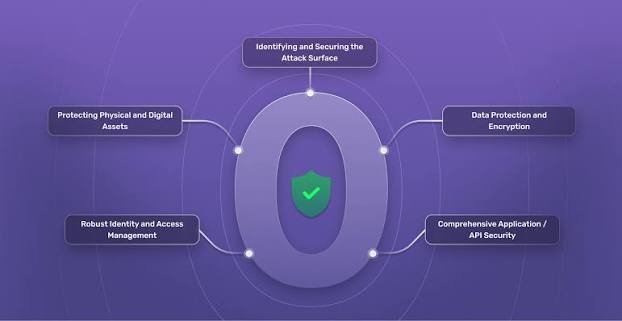
Traditional perimeter firewalls and subnet tagging were designed for static data centers, creating unmanageable firewall rulesets in dynamic hybrid cloud environments.
Security leaders are deploying software-defined, identity-centric microsegmentation to decouple granular access controls from underlying IP network topologies.
Modernizing enterprise segmentation leverages automated policy mapping, process-level telemetry, and centralized orchestration to neutralize lateral threat movement instantly.
Designed for CISOs, CTOs, security directors, and cloud infrastructure architects implementing NIST 800-207 Zero Trust frameworks.
- Identity-driven microsegmentation models
- Lateral movement & blast-radius containment
- Automated application dependency mapping
- Policy lifecycle orchestration & drift prevention
This intelligence brief provides the definitive blueprint for implementing frictionless Zero Trust network segmentation across complex enterprise environments.
✔ Workload isolation & blast-radius framework
✔ Automated policy generation & mapping matrix
✔ Hybrid cloud microsegmentation roadmap
✔ NIST 800-207 Zero Trust compliance guide