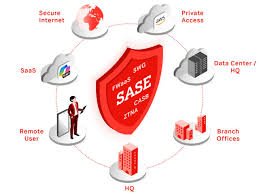
Perimeter-based network security is obsolete as enterprise workloads shift to multi-cloud architectures and remote branch access needs escalate.
Security leaders are adopting Secure Access Service Edge (SASE) to consolidate SD-WAN, CASB, FWaaS, and Zero Trust Network Access into a single cloud-native service.
Enterprise teams leverage SASE architecture to eliminate MPLS backhaul latency, lower licensing overhead, and maintain continuous inspection across identity and cloud traffic.
Designed for CISOs, CTOs, Enterprise Security Heads, and Infrastructure Directors leading edge security convergence.
- Unified SD-WAN & SSE convergence framework
- Identity-driven Zero Trust policy enforcement
- Cloud-delivered FWaaS and CASB integration
- MPLS-to-SASE migration & cost reduction guide
This implementation framework delivers an actionable blueprint for deploying cloud-native SASE architecture to secure enterprise perimeter boundaries.
✔ SASE architectural maturity assessment
✔ SSE & SD-WAN convergence roadmap
✔ Zero Trust edge policy framework
✔ Executive implementation guide