Traditional MPLS routing introduces severe latency bottlenecks, inflated transport costs, and operational friction for cloud-first enterprise environments.
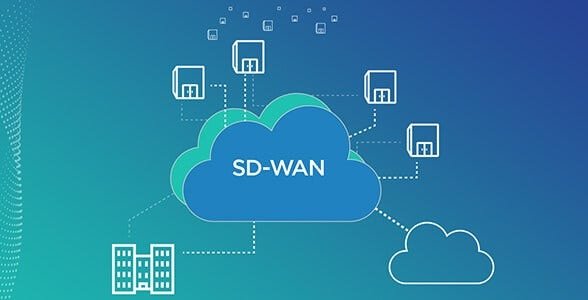
Software-Defined Wide Area Networking (SD-WAN) decouples network control from underlying hardware, programmatically routing application traffic across optimal transport paths.
Enterprise infrastructure leaders leverage SD-WAN to enforce dynamic path selection, integrate cloud-native security (SASE), and eliminate single-point transport dependencies.
Designed specifically for CTOs, CIOs, Network Directors, and Enterprise Systems Architects modernizing distributed branch infrastructure.
- Dynamic multi-path traffic optimization
- Centralized overlay control plane
- Integrated SASE security architecture
- Cloud edge acceleration strategies
This technical intelligence brief provides actionable guidance for architecting, deploying, and optimizing enterprise-grade SD-WAN solutions at global scale.
✔ Multi-path traffic optimization model
✔ Enterprise MPLS-to-SD-WAN roadmap
✔ Integrated SASE security framework
✔ Cost reduction & ROI calculator